



A few years ago, producing a photorealistic image of a city at dusk required a camera, a location, favorable weather and a skilled photographer. Producing a painting in a particular style required years of training. Today either result can be summoned with a sentence typed into a text box. That shift, from making images to describing them, is the most visible face of generative artificial intelligence and one of its most contested.
Gramhir.pro AI Art is the section of this site dedicated to that shift. It covers how AI image generation works, which tools lead the field, how professionals and hobbyists are using them, the copyright and ethical questions that surround the technology, and the practical craft of getting good results. The coverage is written for designers, marketers, illustrators, photographers, educators, developers and curious newcomers who want to understand what these tools can do without the hype or the panic.
This pillar guide gathers the fundamentals in one place. By the end you will understand the technology beneath the interface, the strengths and limits of the main approaches, a repeatable workflow for producing usable images, and the legal and ethical landscape that anyone publishing AI art needs to navigate.
What Is Gramhir.pro AI Art?
Gramhir.pro AI Art is an editorial hub within the Artificial Intelligence section of the site. It sits alongside coverage of AI generators, AI writing tools, AI ethics and AI regulation. That placement is deliberate, because AI art is not just a creative topic. It is a technology story, a labor story, a legal story and an ethics story all at once.
The scope of the coverage
The section focuses primarily on image generation, including text to image, image to image, inpainting, outpainting, style transfer and upscaling. It also tracks adjacent areas such as AI generated video, 3D asset creation, icon and design system generation, and the tools that integrate these capabilities into professional creative software. Reviews of individual platforms, comparisons between them, prompting guides, workflow tutorials and analysis of copyright developments all fall within the remit.
The editorial position
AI art provokes strong reactions. Enthusiasts describe it as the democratization of creativity. Critics describe it as automated plagiarism that threatens the livelihoods of working artists. Both positions capture something real, and neither is a complete account.
Gramhir.pro AI Art treats generative image tools as powerful instruments that expand what individuals and small teams can produce, while acknowledging that they were built on the work of millions of artists who were not asked and have not been compensated. The section aims to help readers use these tools skillfully and responsibly, to understand the legal uncertainty that still surrounds them, and to think clearly about where human creativity remains essential.
How AI Image Generation Works
Knowing what happens between your prompt and the finished image makes you a far better user. The core mechanism is less magical than it appears and more interesting than most explanations suggest.
Diffusion models in plain language
Most contemporary image generators are diffusion models. During training, the system learns to reverse a process of gradual corruption. Real images are progressively degraded with random noise until nothing recognizable remains, and the model learns, step by step, how to remove that noise and recover the original. Once trained, the model can start from pure noise and iteratively denoise it into a coherent image, guided by a text description.
The text guidance comes from a separate component that maps words to a mathematical representation shared with images. When you type “a lighthouse on a rocky coast at sunrise, oil painting,” the model translates that description into the same space where it understands visual concepts, then steers the denoising process toward images that match.
Training data and what the model learned
The model’s capabilities come entirely from its training data, typically hundreds of millions or billions of image and caption pairs scraped from the internet. This is why generators can imitate recognizable artistic styles, reproduce common compositions and render familiar objects convincingly. It is also why they inherit the biases, gaps and copyrighted material present in that data. The model does not store images, but it does learn statistical patterns that can, in some cases, reproduce specific works or distinctive styles closely enough to raise legal concerns.
Control techniques beyond the prompt
Text alone is a blunt instrument. Modern tools offer additional controls. Reference images guide composition or style. Inpainting regenerates a selected region while preserving the rest. Outpainting extends an image beyond its original borders. Control networks constrain the output to follow an edge map, a depth map or a human pose. Fine tuning and adapter methods allow users to teach the model a specific subject, character or aesthetic from a small set of examples. Mastering these controls is what separates casual experimentation from professional production.
The Main AI Art Tools and Approaches
The landscape changes quickly, but the categories of tools are relatively stable. Understanding the categories helps you evaluate any new entrant.
Hosted commercial platforms
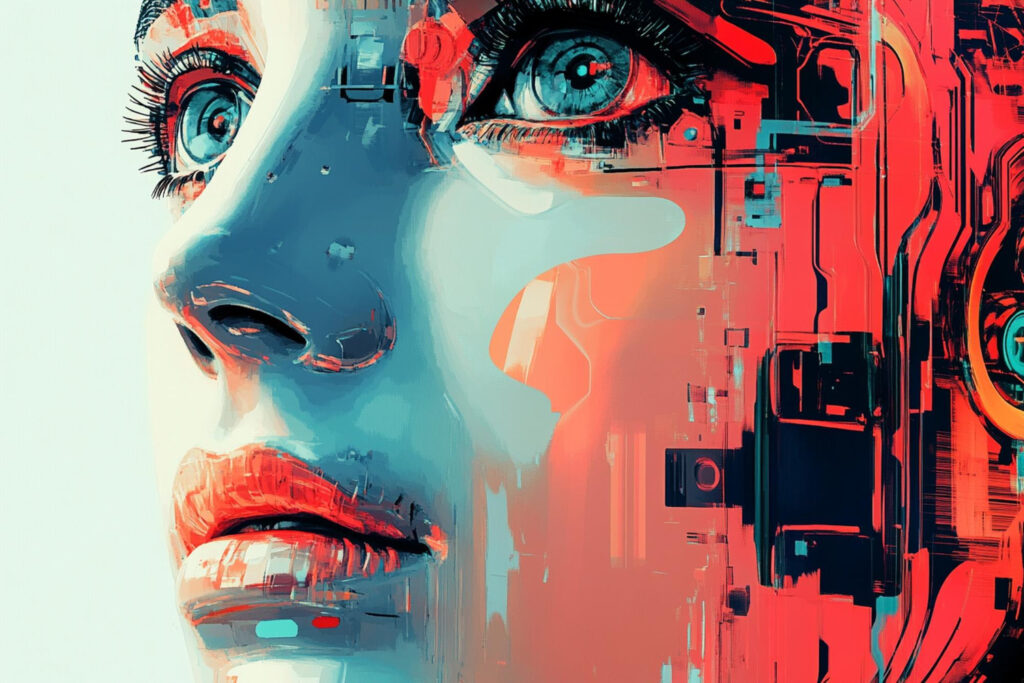
Services accessed through a web interface or chat application dominate consumer and professional use. They offer polished results with minimal setup, regular model updates and integrated editing features. The tradeoffs are cost, limited control over the underlying model, content restrictions and uncertainty about how your inputs are used. Our detailed Midjourney review covering its best features and real limitations for designers examines one of the leading platforms in depth and is a good starting point for anyone comparing hosted options.
Open weight models
Openly released models can be run on your own hardware or through third party services. They offer full control, no usage restrictions beyond your own judgment, the ability to fine tune on private data and a vast ecosystem of community extensions. The tradeoffs are technical complexity, hardware requirements and the absence of the guardrails that hosted platforms provide.
Integrated creative software
Established design and photo editing applications now embed generative features directly into their workflows. Generative fill, background extension, object removal and style variations sit alongside traditional tools. For professionals already working in these environments, integration often matters more than raw generation quality, because it keeps AI within a familiar, layered, non destructive workflow.
Specialized generators
Beyond general purpose image creation, a growing set of tools target specific needs: icons and design system assets, product mockups, architectural visualization, character consistency for storytelling, texture generation for 3D work and video generation from text or images. Our analysis of standardizing design systems with Icons8 in the age of AI shows how specialized asset libraries and generative tools are converging in professional design workflows.
AI Art Tools and Techniques Compared
The table below summarizes the main approaches tracked by Gramhir.pro AI Art, with their strengths, limitations, typical costs and the users they suit best.
| Approach or Technique | Best For | Output Quality and Control | Main Limitations | Typical Cost Model | Copyright and Usage Considerations | Ideal User |
|---|---|---|---|---|---|---|
| Hosted text to image platforms | Concept art, marketing visuals, illustration, rapid ideation | High quality, moderate control, fast iteration | Content filters, limited fine tuning, style drift between versions | Monthly subscription with generation limits | Terms vary on commercial rights; ownership of outputs is legally uncertain | Marketers, designers, hobbyists |
| Open weight diffusion models | Custom styles, unrestricted experimentation, batch production | Variable quality, maximum control | Hardware needs, technical setup, no built in safeguards | Free software, hardware or cloud compute costs | User bears full responsibility for outputs and training data used | Developers, technical artists, studios |
| Integrated editing features | Retouching, background extension, object removal, composites | High for edits, limited for full generation | Tied to one software ecosystem, subscription lock in | Included in creative suite subscription | Vendors often claim commercially safe training data | Photographers, professional designers |
| Image to image and style transfer | Restyling existing work, consistent variations, sketch to render | High fidelity to source, strong control | Requires a good source image; can reproduce source flaws | Included in most platforms | Restyling copyrighted source images does not create a new copyright | Illustrators, concept artists |
| Inpainting and outpainting | Fixing details, extending canvases, removing artifacts | Precise local control | Seams and inconsistency at boundaries | Included in most platforms | Same as underlying tool | All users at the refinement stage |
| Fine tuning and adapters | Consistent characters, brand styles, personal likeness | Very high consistency for trained subject | Needs curated training set, risk of overfitting | Compute cost per training run or platform fee | Training on others’ work without permission raises legal and ethical issues | Studios, brands, serious hobbyists |
| Control networks and pose guidance | Precise composition, architecture, product placement | Exceptional structural control | Requires preparing control inputs | Usually free with open models | Same as underlying tool | Technical artists, product visualizers |
| Upscaling and enhancement | Print preparation, restoring low resolution images | High detail recovery | Can invent details not in the original | Per image or subscription | Enhancement of copyrighted images does not confer ownership | Print designers, photographers |
| Text to video generation | Short clips, motion graphics, storyboards | Improving rapidly, still inconsistent | Temporal coherence, short duration, high compute | Credits per second of video | Emerging area with few settled rules | Motion designers, advertisers, experimenters |
The pattern across the table is instructive. Ease of use and control trade off against each other, and the most commercially cautious options are the ones that restrict what you can do. Serious creative work usually involves combining several approaches: hosted generation for ideation, image to image and inpainting for refinement, and integrated editing tools for final production.
A Practical AI Art Workflow
Producing a striking image once is easy. Producing usable, consistent, on brief images repeatedly is a craft. The workflow below reflects what Gramhir.pro AI Art recommends for professional and semi professional use.
Step 1: Define the brief before touching the tool
Start with the purpose. Where will the image appear? What size and aspect ratio does it need? What mood, palette and style fit the context? Who is the audience? What must the image include and what must it avoid? A written brief, even a short one, prevents the aimless generation that wastes credits and produces nothing usable.
Step 2: Build the prompt in layers
Effective prompts describe subject, setting, composition, lighting, style, medium and mood in roughly that order. Be specific about what matters and silent about what does not. Reference concrete visual vocabulary: “low angle, golden hour, shallow depth of field, 35mm film grain” communicates more than “beautiful and cinematic.” Negative prompts, where supported, exclude common failure modes such as extra limbs, text artifacts or unwanted objects.
Step 3: Generate wide, then narrow
Produce a batch of variations rather than a single image. Evaluate them against the brief, identify which elements are working, and refine the prompt or use the best result as a reference for image to image generation. Iteration is where quality comes from. Expect several rounds before the composition is right.
Step 4: Refine with local tools
Once the overall image is close, switch from regeneration to editing. Use inpainting to fix hands, faces, text and other details that diffusion models struggle with. Use outpainting to adjust framing. Use upscaling to reach the required resolution. This stage often takes longer than generation and is where professional results are made.
Step 5: Finish in traditional software
Color grading, typography, compositing, retouching and format preparation belong in conventional design and photo editing tools. AI generated images are raw material, not finished deliverables. Treating them as a starting point rather than an endpoint produces work that looks intentional instead of generic.
Step 6: Document and disclose
Keep records of prompts, seeds, model versions and source images. This supports reproducibility, protects you if provenance is questioned, and is increasingly expected by clients and platforms. Decide on a disclosure approach that fits your context. Many publishers, marketplaces and competitions now require AI involvement to be declared.
Copyright, Ethics and the Artist Question
No discussion of AI art is complete without addressing the questions that make it controversial. These are not settled, and Gramhir.pro AI Art tracks them closely.
Training data and consent
The models that power AI art were trained on vast collections of images gathered from the internet, including copyrighted artwork and photography, largely without the permission of the creators. Lawsuits in several jurisdictions are testing whether this constitutes infringement or falls under exceptions such as fair use or text and data mining provisions. Some developers have responded by training only on licensed or public domain content, offering opt out mechanisms, or compensating contributors. The outcomes of these cases will shape the industry for years.
Ownership of generated images
In many jurisdictions, copyright requires human authorship. Purely AI generated images may not be protectable at all, which means anyone could reuse them. Images with substantial human creative contribution, through detailed direction, editing and composition, may qualify for protection of the human contributed elements. Platform terms of service add another layer, granting or restricting commercial use of outputs. Anyone building a business on AI generated visuals should understand that the legal ground is uncertain.
Style imitation and named artists
Prompting a generator to mimic a living artist’s distinctive style raises ethical concerns even where it may be legal. Many platforms now block prompts naming contemporary artists. Gramhir.pro AI Art recommends developing original aesthetics rather than imitating identifiable creators, both as a matter of respect and because distinctive work stands out in a landscape saturated with imitation.
Bias, representation and harmful content
Image generators reflect the biases of their training data. Prompts for professionals may default to particular genders and ethnicities; prompts for beauty may reproduce narrow standards. Generators can also produce non consensual intimate imagery, deceptive deepfakes and violent or hateful content. Responsible use means prompting deliberately for diversity, refusing to create deceptive or harmful images, and supporting the provenance and watermarking standards that help audiences identify synthetic media.
The impact on working artists
Illustrators, concept artists, stock photographers and designers have seen real economic effects as clients substitute generated images for commissioned work. At the same time, many artists have integrated these tools into their practice, using them for ideation, reference and speed while retaining creative direction. The honest position is that AI art is both displacing some creative labor and augmenting other creative labor, and that the balance depends on choices made by companies, clients, regulators and users.
The Future of Gramhir.pro AI Art
The pace of change in generative imaging shows no sign of slowing. Several developments will shape coverage over the coming years.
Video generation is maturing from short, unstable clips toward coherent sequences with consistent characters and controllable camera movement, which will transform advertising, entertainment previsualization and social content. Three dimensional generation is moving from novelty to production use in games, architecture and product design. Real time generation is enabling interactive creative tools where images update as you draw or speak. Provenance standards and watermarking are becoming embedded in major platforms, driven partly by regulation.
On the legal side, the first major court decisions on training data and output ownership will establish precedents that either legitimize current practices or force the industry toward licensed data and creator compensation. On the creative side, the novelty of AI generated imagery is fading, and audiences increasingly reward work that shows human intention, craft and originality regardless of the tools involved.
Gramhir.pro AI Art will keep tracking the tools, the techniques, the cases and the debates. The guiding commitment is unchanged. Help people create better images, understand the technology they are using and engage honestly with the questions it raises.
Summary Keys
Gramhir.pro AI Art is the site’s editorial hub for understanding AI image generation, the tools that provide it and the creative, legal and ethical questions it raises.
Most modern generators are diffusion models that learn to turn noise into images guided by text, with capabilities and biases inherited entirely from their training data.
Hosted platforms offer ease and polish, open weight models offer control and freedom, and integrated editing software offers workflow continuity; professional work usually combines all three.
Prompts work best when built in layers describing subject, setting, composition, lighting, style and mood, followed by wide generation and iterative narrowing.
Inpainting, outpainting, upscaling and traditional editing software turn raw generations into finished deliverables; AI output is a starting point, not an endpoint.
Copyright over AI generated images is uncertain in many jurisdictions, training data lawsuits are unresolved and platform terms add further restrictions.
Imitating living artists by name, generating deceptive or harmful content and ignoring representational bias are avoidable ethical failures.
Video, 3D, real time generation and provenance standards will define the next phase, while audiences increasingly reward human intention and originality.
Frequently Asked Questions
Can I use AI generated images commercially?
Often yes, but with important caveats. Most hosted platforms grant commercial usage rights to paying subscribers in their terms of service, though the specifics vary and can change. Separately, copyright law in many jurisdictions does not protect purely AI generated images because they lack human authorship, which means you may be able to use the image but cannot stop others from using it too. Images with substantial human creative input, such as extensive editing and compositing, are more likely to be protectable. Avoid images that closely reproduce identifiable copyrighted works or the distinctive style of living artists, as these carry additional legal and reputational risk. When in doubt, consult a lawyer familiar with intellectual property in your jurisdiction.
Why do AI art generators struggle with hands, text and faces?
Diffusion models learn statistical patterns rather than anatomical rules. Hands appear in training images in countless positions, often partially hidden, which makes them hard to model consistently. Text is treated as visual texture rather than language, so letters come out garbled. Faces are handled reasonably well in isolation but suffer in small sizes or crowded scenes. Newer models have improved substantially on all three, and control techniques such as inpainting, pose guidance and dedicated face restoration tools address most remaining problems. The practical answer is to generate the overall composition first and then fix these details in a refinement pass.
Is AI art replacing human artists?
AI art is changing creative work rather than simply replacing it. Some categories of commissioned work, particularly generic stock imagery and quick concept sketches, have seen real displacement as clients turn to generators. At the same time, many professional artists have adopted these tools to accelerate ideation, explore variations and handle repetitive tasks while retaining creative direction over the final result. Skills such as art direction, composition, visual storytelling, brand thinking and craft in traditional tools have become more valuable, not less, because they are what distinguish intentional work from the flood of generic output. The labor and compensation questions are serious and unresolved, and how they are settled will depend on legal decisions, industry norms and the choices of clients and platforms.



