





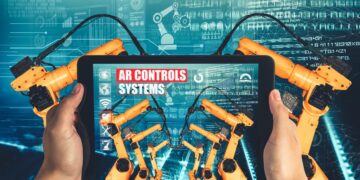







Recent news suggests the next big step in AI might be Specialized Generalist Intelligence (SGI) which has caught the attention of researchers and industries. A startup, Physical Intelligence, received $400 million to develop an AI system capable of controlling different robots.
The idea behind the SGI approach is to make a generalist brain that can adapt to various tasks instead of being designed to do one thing only. These AI systems are dual in nature meaning they excel in at least one task but can do more beyond those as well, rather than being limited.
This may allow them to be better than us in certain areas and industries. As this whole thing gains traction, it’s important to look at what areas SGI might influence the most but also others where it may not be that effective.
Gaming – Likely to Change
Gaming is one key area where SGI is likely to bring a revolution and will change how games are made and played. Players will benefit from this as more immersive and adaptive environments will be catered to in games which will enhance the overall experience.
Games have already gone through many digital evolutions. Slot games, for instance, have undergone a transformation since digital platforms emerged. This evolution brought us to the point where online gaming has become more popular than its traditional counterpart thanks to its high flexibility. For example, IgnitionCasino slot games now offer more diverse features that build on player engagement, which we call personalization. Most of the platforms use AI models and machine learning to understand what players like, and what their journey is on the website to craft a unique gaming experience.
In the case of slot games, machine learning may play an even bigger role. Slots have a thematic approach and can be one of the most versatile games, allowing to have customizable gaming offers.
So, as future gaming evolves, we’re likely to see SGI shine in adjusting game mechanics according to your performance and also better NPC dynamics through reinforcement learning as seen by Google’s DeepMind.
Healthcare – Likely to Change
SGI in healthcare will allow medical professionals to work alongside artificial intelligence to better the lives of patients. This tech will improve diagnostic accuracy, which traditionally involves human interpretation and is prone to error as stated. These errors make up 60% of all medical-related errors so cutting down on them will allow for more precise diagnostics.
Apart from this, SGI technology could help with creating personalized treatment plans based on the patient’s needs by analyzing medical data. Another critical area, the early detection of diseases is also likely to be enhanced by AI tools so treatments can start earlier giving a better fighting chance against threatening diseases like cancer.
Finance – Likely to Change
Financial companies have large amounts of data that need to be studied and are then used to make informed decisions. With SGI, these companies could analyze data effectively and deliver better customer service. An AI solution that reads data in real-time and makes accurate predictions will make forecasting before decisions a breeze.
Also, there are challenges of cybersecurity and fraud occurring in the financial world, and an AI model that monitors these would be well-received. There’s already the example of JPMorgan Chase, where an AI system analyzes transactions and reduces fraud cases significantly. Individuals can also benefit here by using AI to manage their finances, leading to more favorable outcomes.
Education – Likely to Change
Specialized Generalist Intelligence has the potential to reshape how we approach education in the future, particularly in curriculum-related areas. Creating personalized learning experiences through AI would mean each student can be looked after individually and content can be adjusted accordingly.
Additionally, teachers could also get support if the AI is built to automate admin tasks and facilitate professors in grading. As the job market changes, students will be better equipped for future careers according to advancements as skills can be cultivated with the aid of SGI.
E-commerce – Likely to Change
With the e-commerce market expected to reach a new high of 4,791 billion USD in 2025, the inclusion of SGI in this field promises to enhance customer experience as well as optimize operations and drive up sales.
One notable change that will occur as a result of SGI will be personalized shopping experiences according to consumer behavior. Vendors will also get feasibility as inventory management will be streamlined along with other operations.
Artisanal Craftsmanship – Unlikely to Change
One industry that is unlikely to be affected by SGI is artisanal craftsmanship as this sector still uses traditional techniques and encourages individual creativity. While some may believe automation could speed up the process, in reality, handcrafted goods by skilled artisans are highly sought after and tech cannot replicate this.
The market demands authenticity and since the world view is shifting towards sustainability, many consumers are actively seeking artisans who produce with care and regard towards the environment.
Legal Sector – Unlikely to Change
Despite heavy advancements being witnessed in AI systems, the legal sector has remained largely untouched and unbothered. This is because legal processes rely on human judgment, ethical considerations, and a deep understanding of legal frameworks that tie everything together. These core practices are impossible for an AI to understand and require human intervention.
Each case brought in court is different, with varying outcomes and motives involved, and professionals who deal with these must navigate ethical dilemmas and interpret laws according to societal values and norms. SGI might help with data analysis work, but the task of delivering actual judgment is best left to humans.



